Blown Away By Dartmoor… LITERALLY!!! - A Shake Down Hike
Ben
Origional Post on the Trek: Blown away by Dartmoor... LITERALLY!!! - A Shake Down Hike - The Trek
Introduction
If you’ve read our bio or previous posts, you’ll know we’re from the wet and windy island of Great Britain. Most of our hiking takes place in the UK’s national parks — landscapes shaped as much by rain and cloud as by the trails themselves.
Camping here comes with its own challenges. In England, wild camping is technically only legal in limited parts of Dartmoor National Park, though it’s often tolerated in remote upland areas and isolated coastal spots. But the real challenge of hiking in the UK isn’t legality — it’s the weather. Rain, wind, fog, and more rain. Sometimes all within the same hour.
So naturally, Dartmoor felt like the perfect place to test ourselves and our gear before our upcoming Iceland traverse.
Into the Moor
After an early Saturday start, we made the 3.5-hour drive to Fenworthy, arriving just before 8 a.m. By 9, we were on the trail with only a rough plan. Head toward Wistman’s Wood, visit a few tors and stone circles, and find somewhere to camp before dark. The weather, surprisingly, was on our side at first.
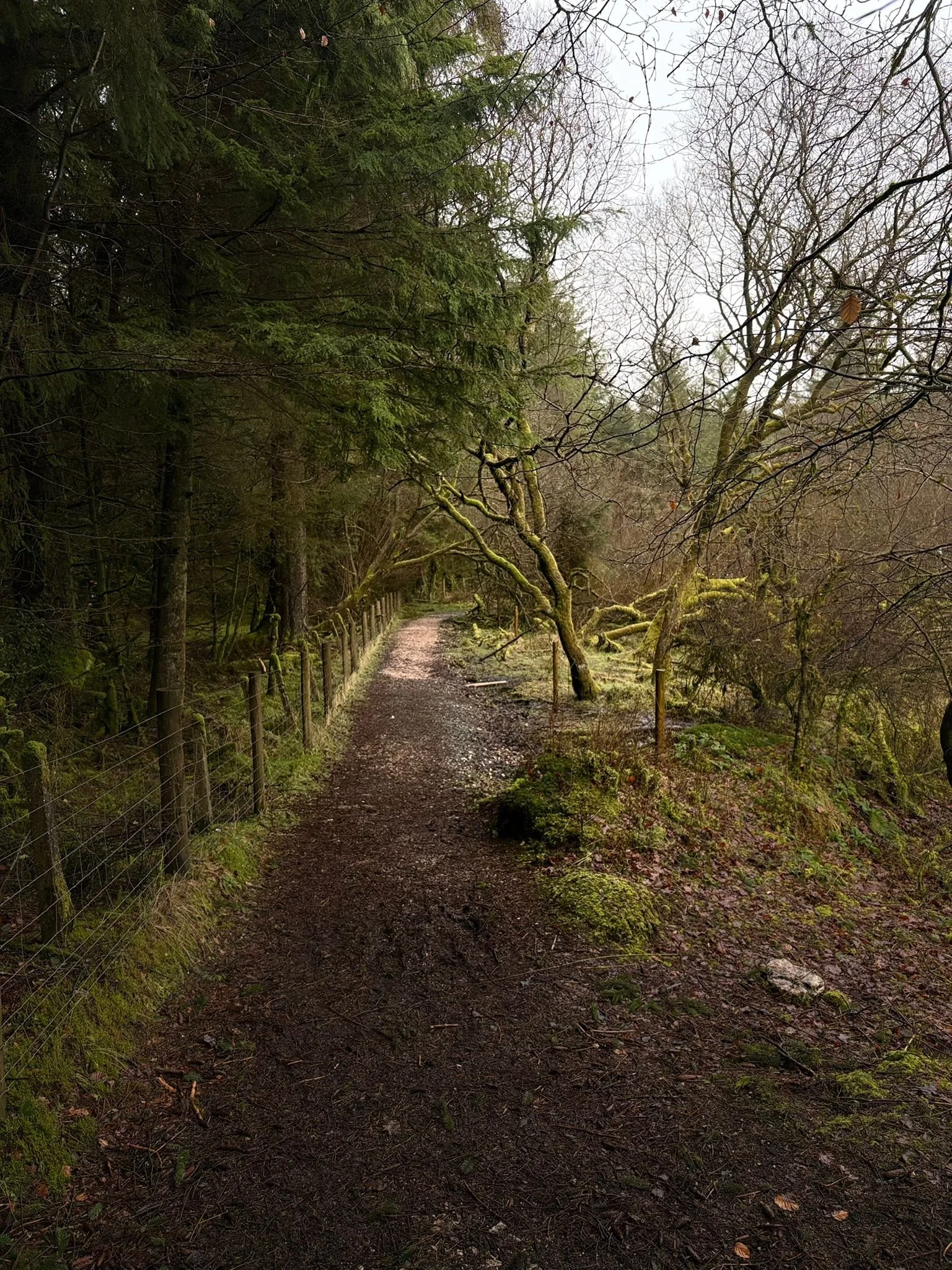
We followed the trail around Fenworthy Reservoir beneath bright skies, Miranda carrying her new Gossamer Gear pack while I tested out a pair of Topo Traverse shoes for the first time. The route climbed gently past a waterfall and into pine woodland, where well-maintained paths allowed us to settle into an easy rhythm. More than anything, we were just happy to be out there. Away from work, away from screens, and back in the hills.
The Windfall
As soon as we reached the edge of the woods, our luck changed. Ahead of us lay what looked like an impassable wall of windfall. Huge trees tangled together in every direction just as the rain began to fall. We climbed over trunks, crawled beneath branches, and squeezed through gaps while debating the least painful route through the chaos. Slipping on wet branches and tree trunks became unavoidable. Somehow, we escaped with only a few cuts and bruises. We finally emerged from the fallen trees… only to find the rain and fog descending around us, swallowing the hills above. Classic England.
Ancient Stones and Driving Rain
We pushed onward, passing the Grey Wethers stone circles. A pair of Bronze Age circles thought to be over 4,000 years old. Standing there in the mist and wind, it was hard not to stop and imagine how wild this landscape must have felt thousands of years ago. From there, the route climbed higher into the full force of the wind. The rain intensified. Winds gusted around 40 mph. Visibility dropped to almost nothing. Good preparation for Iceland, we figured.
Finding Camp in the Fog
As we descended the far side of the moor, the weather finally eased and views opened toward Wistman’s Wood, one of Dartmoor’s most iconic landscapes. Twisted oak trees clung to moss-covered boulders beneath drifting cloud, looking like something from a fantasy novel. We made good progress over several tors before dropping down toward the village and climbing again through newer forest plantations in search of a campsite. That turned out to be harder than expected. The moor was covered in uneven ground, sharp grass tussocks, and hidden rocks. As darkness and fog rolled in, we spent nearly an hour wandering through the gloom searching for somewhere remotely flat enough to pitch. Eventually, we found a small patch beside a rocky outcrop that offered at least some shelter from the wind. Not perfect, but good enough.
First Night in the Fjällräven Abisko Lite 2
This trip was our first proper test of the Fjällräven Abisko Lite 2 before Iceland. Setting it up in high winds on rough ground was… educational. We repositioned the tent multiple times to avoid sharp rocks while trying to stop the wind from ripping it from our hands. Eventually, we managed to get it pitched and dove inside just as the rain intensified again.
The wind hammered relentlessly against the tent, flexing the fabric hard enough to make some deeply concerning noises. At one point, the gusts shifted direction entirely and began crushing the side wall inward toward us. Safe to say sleep was near enough impossible. Ear plugs for Iceland I think! I spent most of the night mentally rehearsing evacuation plans: how we’d get off the moor, where we could shelter, and what we’d do if the weather worsened further. By 5 a.m., neither of us had slept much at all. But the tent held strong and my "evacuation plans" felt a little silly.
The River Crossing
After a quick breakfast inside the tent, we packed up and stepped out into thick fog and a slightly calmer breeze. The storm had mostly passed. We followed a leat (a very British word for a man-made water channel) down across the moor as the clouds slowly began to break apart. The morning brought better visibility and some incredible views across Dartmoor.
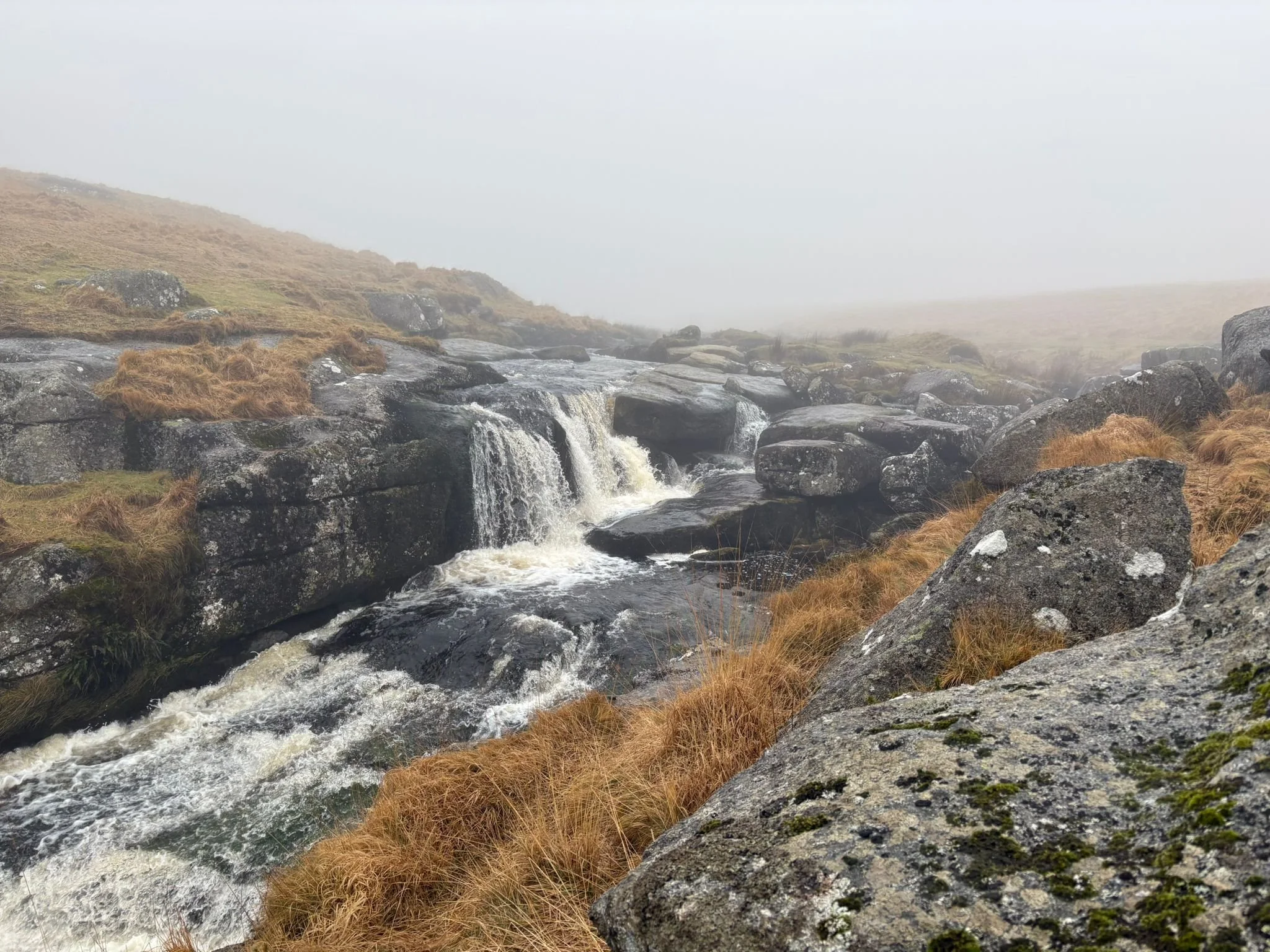
Eventually, we rejoined the route from the previous day and arrived at a small river crossing we’d barely thought twice about earlier. Except overnight rain had transformed it completely. The stream was now a fast-flowing torrent. We searched upstream until the ground turned to bog. Downstream looked even worse. Eventually, we accepted that our original crossing point was probably our best option. I went first. Using trekking poles to probe for depth, I stepped cautiously into the freezing water. It rose quickly to my waist, even higher in places, while the current pushed hard against my legs. The rocks underfoot were slick and unstable, shifting as I put my weight on them. Halfway across, the current nearly swept my feet away entirely. When I reached the opposite bank, I had to scramble chest-first onto the muddy bank while trying not to get dragged downstream. Miranda crossed the same route far more gracefully than I did, and together we hauled her and her pack onto the bank. On the Great Divide Trail we’d crossed plenty of rivers, but honestly, we’d been lucky. Nothing had compared to this. And Iceland’s river crossings are likely to be far worse.
“At Least We’re Not the Only Idiots…”
Not long after the crossing, we finally encountered other hikers. They looked soaked and exhausted, waterproofs drenched through, packs dripping water despite the rain having stopped an hour earlier. “At least we’re not the only idiots camping out in that last night,” one of them laughed while passing us. Fair point!
We dropped back into the woodland surrounding Fenworthy Reservoir, this time taking a different route through older forest filled with pine, moss covered rocks, and streams running down from the hills above. Rain showers returned just in time for the final stretch back to the car. Naturally, as we finally left Dartmoor behind, the sun came out.
Lessons From the Shakedown
Trips like this are exactly why we try to get out whenever we can. This wasn’t about perfect weather or huge mileage, it was about testing systems, refining gear, and learning lessons before Iceland.
The biggest change to our setup was moving to a true four-season shelter capable of handling Icelandic conditions. Safe to say, the Abisko Lite 2 passed its first major test. It’s definitely tighter inside than the palace-like comfort of the X-Mid, but it feels incredibly robust and gives me some confidence in bad weather.
Our new pack liners kept everything dry, the switch to Topo shoes worked well for me, and Miranda’s move to the Gossamer Gear Gorilla 50L also felt like a success. All in all, a valuable yet damp weekend. The terrible weather was probably the best preparation we could have asked for before heading to Iceland for the traverse.
